Eight of the best employee benefits brokers in the UK for 2026, reviewed for HR and People teams at companies with 50 to 500 employees. See who made the cut and why.


.png)
.png)
.png)
If you want your full benefits programme brokered and managed in one place, Kota is the only option on this list that does both. For a traditional broker relationship, Howden, Drewberry and Everywhen are the strongest picks. For full-programme consultancy including pensions, Broadstone or PIB. Read on for a snapshot of our full shortlist and what we think of each one.
A traditional broker finds the right cover for your people at the right price. The policies get placed, the commission gets earned, and the next call is at renewal, often with a premium increase and not enough time to shop the market. Everything that happens in between (new starters to enrol, leavers to remove, any mid-year changes to manage) ends up on your plate. You need a modern broker who not only sets up your benefits but holds your full employee benefits programme together as your team grows.
In this piece, we evaluate the best employee benefits brokers across benefits covered, fee model, and whether they help manage your programme beyond renewal. Here's how they compare at a glance:
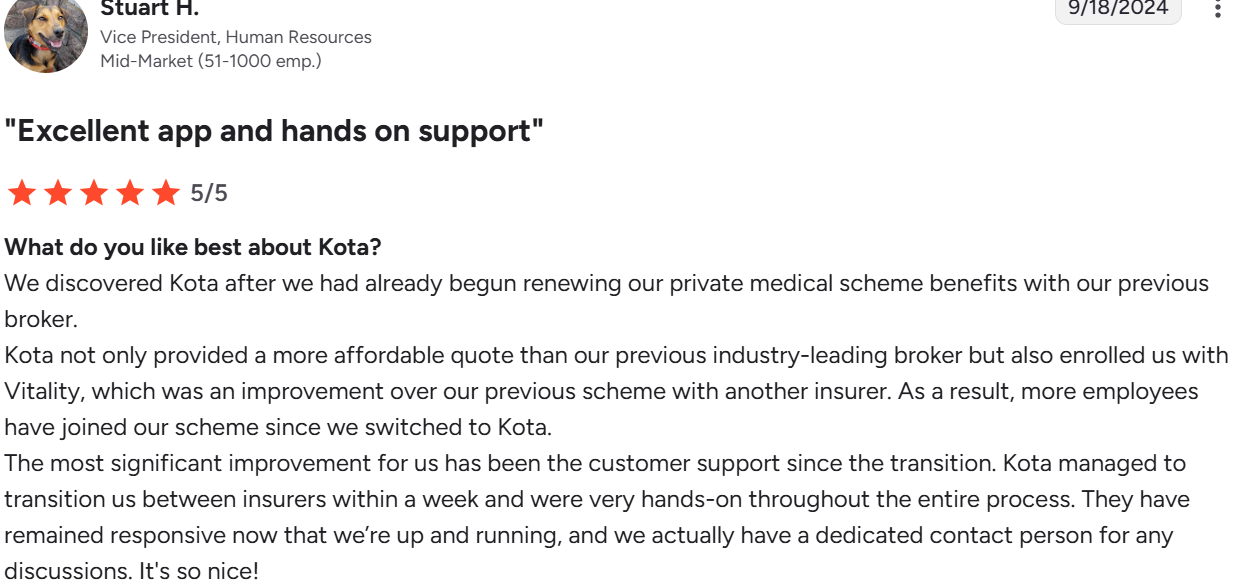
Kota is an FCA-regulated broker that procures and manages group health, life, income protection, pension, and dental for scaling companies across the UK and Ireland. Three years in, we've held onto almost every customer we've ever taken on.
This list draws on that market experience and our understanding of what a broker actually delivers once the policies are placed. We'll start with Kota, then cover the traditional brokers worth considering depending on what your programme needs.
Running an employee benefits programme for a growing team requires keeping multiple policies in sync, not just getting them placed. Specifically, you need:
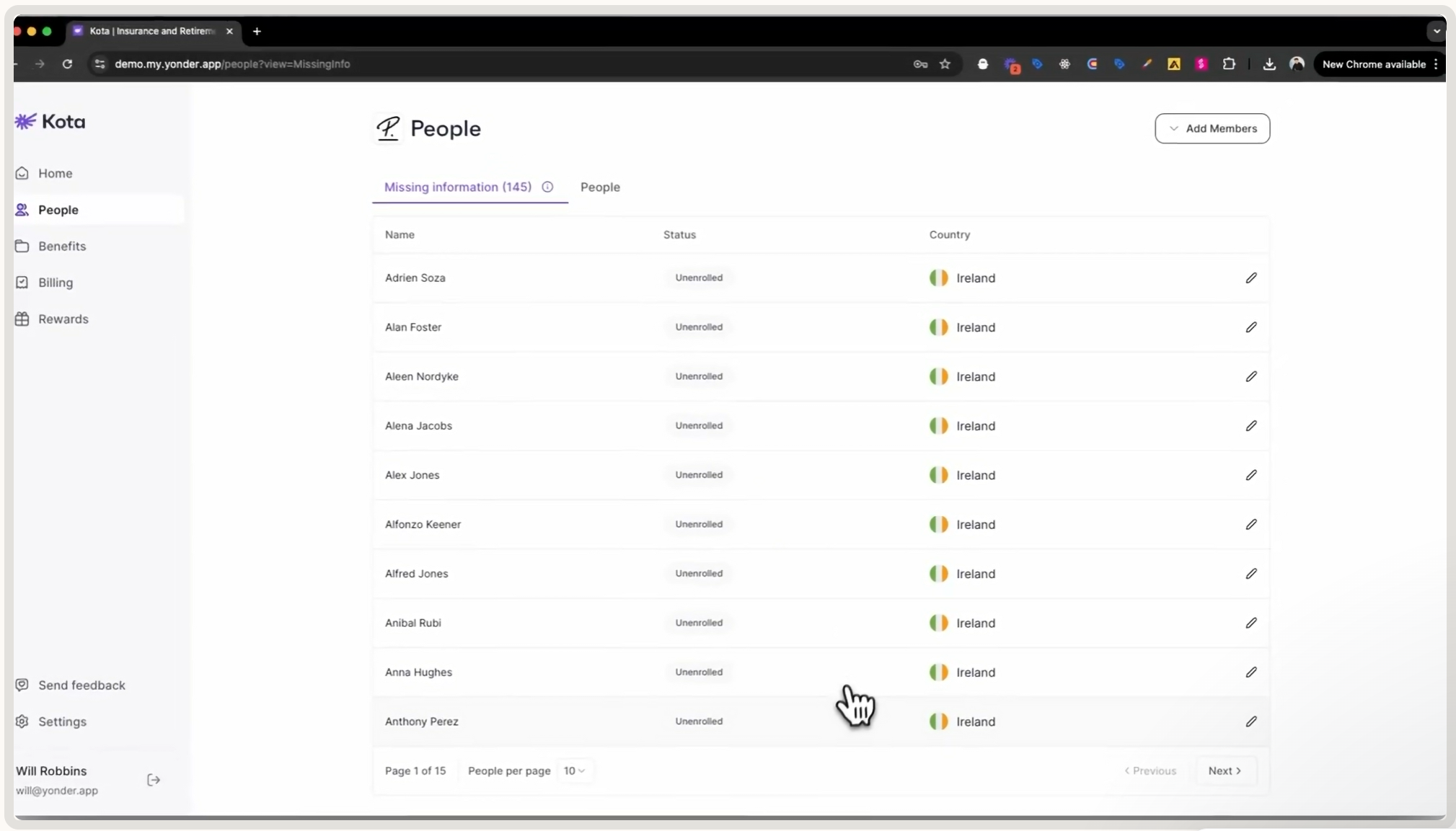
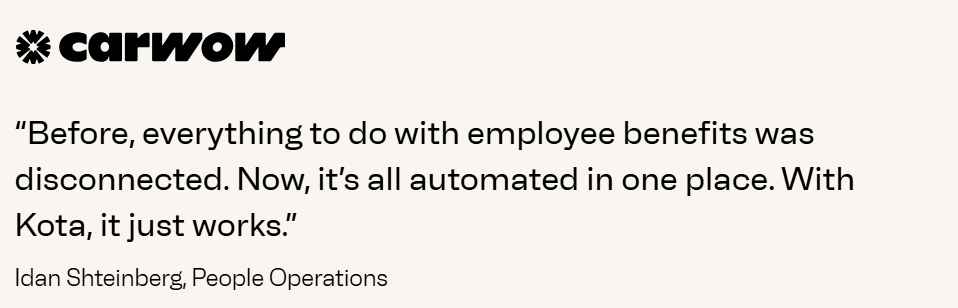
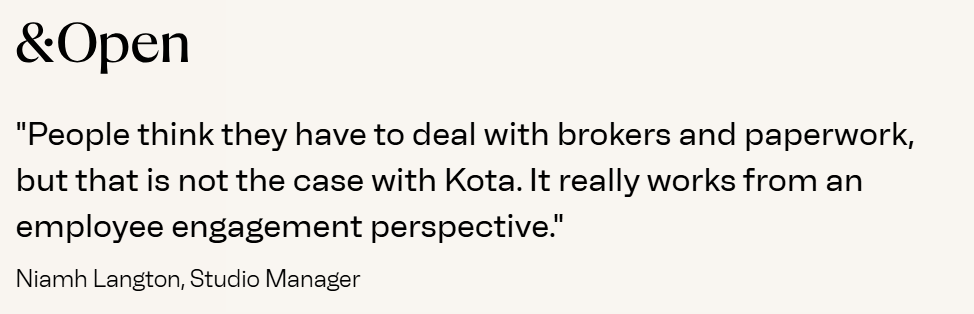
Most HR teams end up managing their benefits programme across three disconnected systems: a broker who handles procurement, a platform for administration, and an HRIS that doesn't properly connect to either. Kota brings all three together, so your employee benefits programme runs in one place from procurement through to payroll.
HR teams using Kota save 12 to 15 hours a month previously spent on manual updates, spreadsheet reconciliation, and chasing providers.
Here's what that looks like in practice:
Kota brokers health insurance across providers including Vitality, Bupa, and Unum, alongside life assurance, income protection, and pension. So instead of managing separate broker relationships for each product, each with their own renewal cycle and point of contact, your whole programme runs through one.
When you need to compare cover, switch providers, or add a new benefit type, it all happens in the same place.
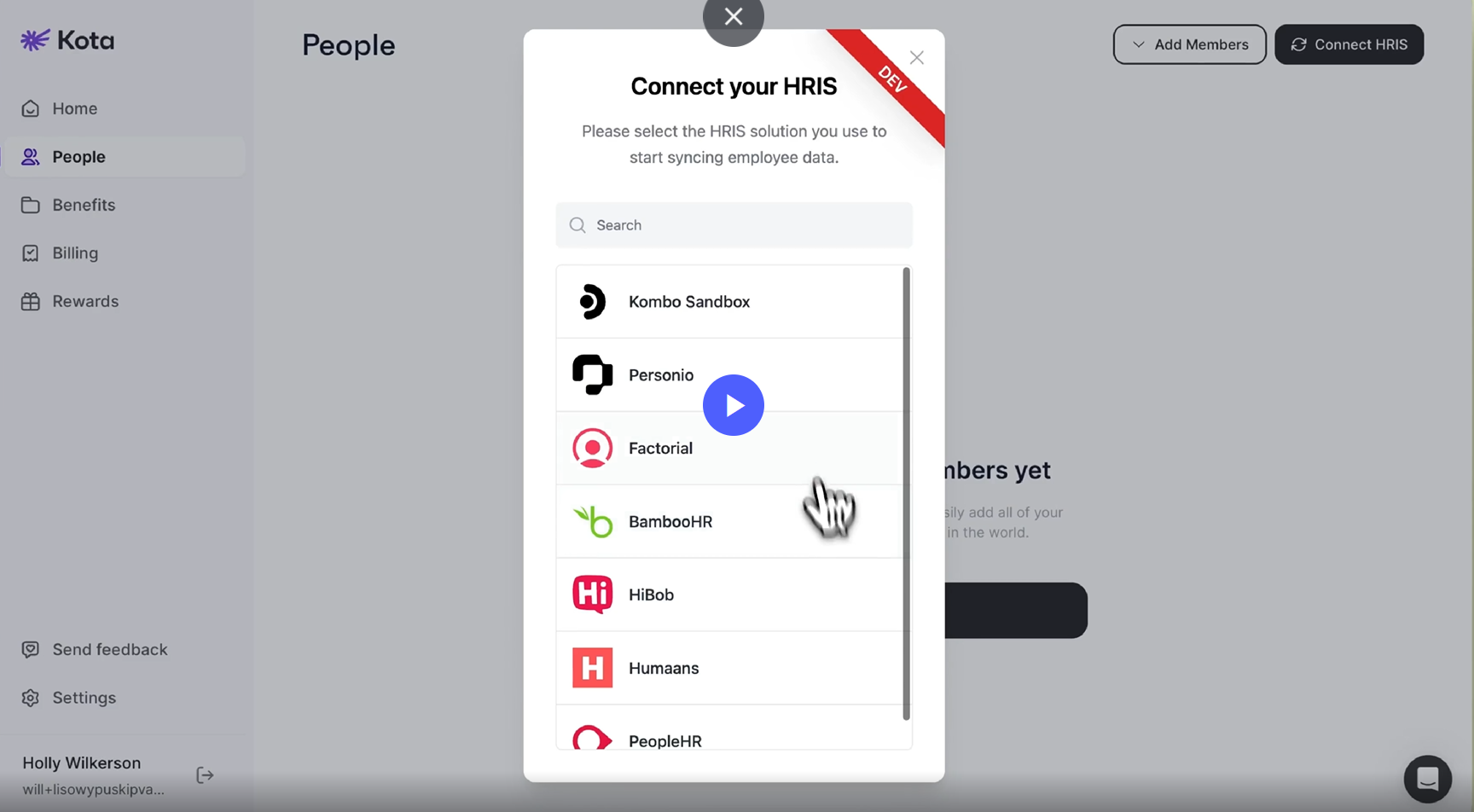
When someone joins your team or leaves, Kota's HRIS sync updates every policy at once. It connects with HiBob, Personio, BambooHR, and others, so there's no manual notification to send to each provider and no spreadsheet to reconcile after the fact.
It also removes the risk of ex-employees sitting on policies they're no longer entitled to, which quietly adds unnecessary cost to your programme.
A benefits programme with multiple products means multiple renewal cycles, each landing at a different point in the year. Without proactive management, those stack up into multiple moments of deadline pressure.
Kota prepares comparison quotes across your whole programme well ahead of each renewal date. Premium increases of 15 to 30% are common across group benefits, and without enough lead time to compare properly, most employers end up accepting whatever they're offered. Kota gives you the time and the data to make a considered decision.
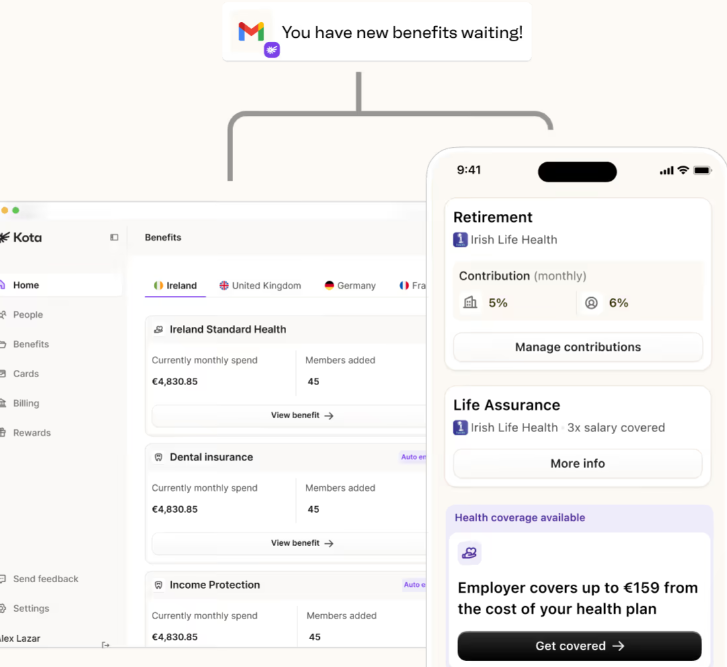
Your people access all their benefits through Kota's app. Health insurance, life assurance, income protection, and pension in one place rather than across multiple provider portals or buried in separate emails.
They can see what they're covered for, make changes, and get support without going through HR each time. That means fewer questions on your desk and a benefits package your people actually understand and use.
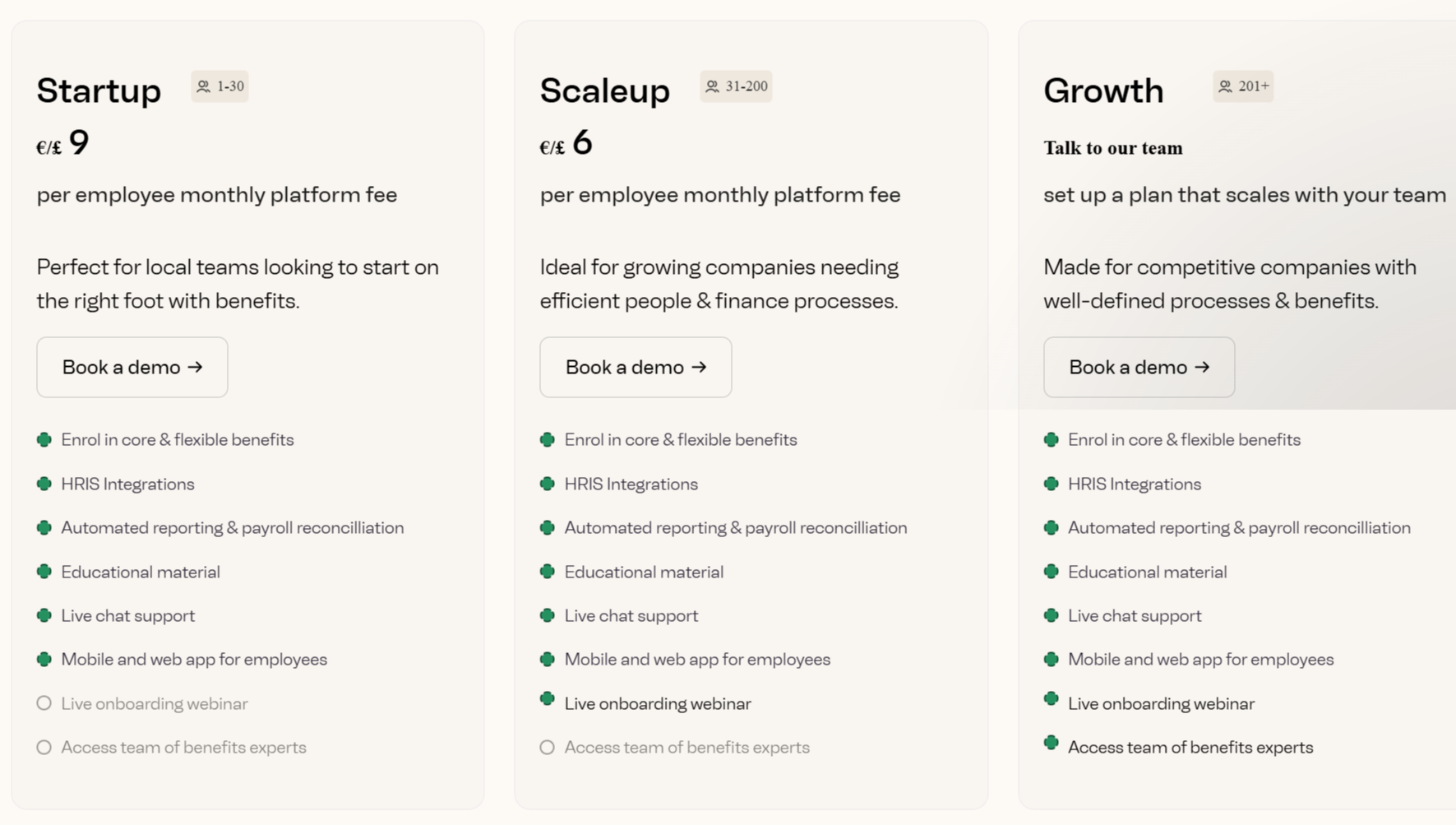
Kota's brokerage comes at no additional consulting fee. Revenue from standard broker commissions funds the service, so there's typically no extra cost compared to going to a separate broker for each product.
For the platform, pricing is per employee per month:
To see how Kota handles your full programme end to end, get a free benefits review.
Still, traditional employee benefits brokers are a solid choice if you have the HR capacity to manage the ongoing administration yourself. Here are the other brokers worth considering.
Howden Employee Benefits & Wellbeing is part of Howden Group, a global brokerage operating across 40 countries. Its specialist Small Business Solutions supports UK SMEs, and the 2025 partnership with Barnett Waddingham added deeper pensions and actuarial expertise to the group’s employee benefits offer.
Private medical insurance, group life, income protection, critical illness, dental, and workplace pensions. Full consultancy-led advice across the whole programme.
Howden Be is their benefits analytics platform, giving HR teams real-time visibility into spend, claims trends, and cost planning.
Employers who want a full-programme consultancy with dedicated SME support and the scale of a major global brokerage behind it.
Commission-based; fees vary by scheme size and complexity.
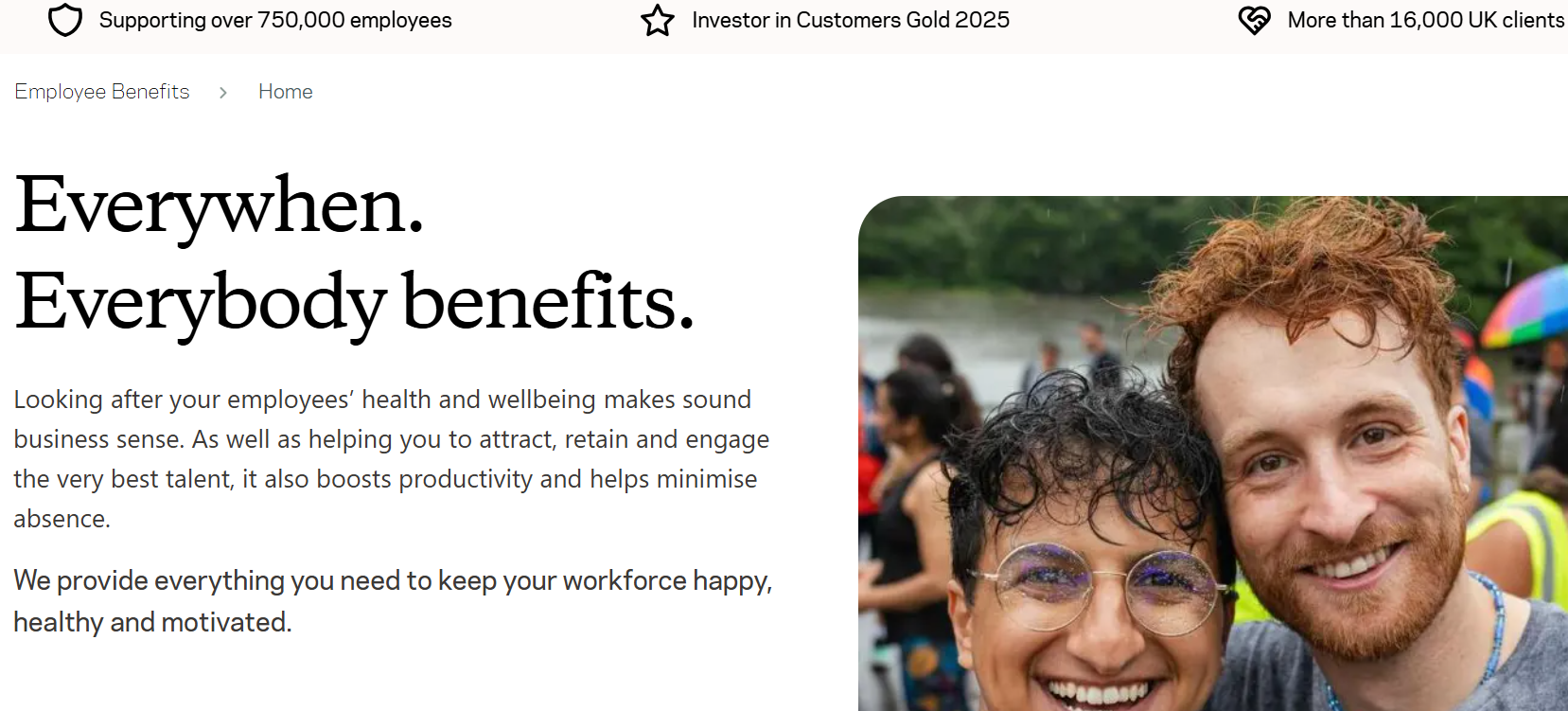
Everywhen (formerly Towergate Employee Benefits) rebranded in 2025 as part of Ardonagh Advisory’s move to a unified brand. They’re a whole-of-market broker, serving businesses from startup to corporate with dedicated SME support. Their claims concierge service is a useful differentiator if you want a broker that stays reachable mid-policy.
Private medical insurance, group protection (life, income protection, critical illness), pensions and financial wellbeing, occupational health, and wellbeing services.
Everywhen offers benefits technology as a standalone service for employers who want a digital portal for their people.
Employers who want a large, independent, whole-of-market broker with SME-specific support during the policy lifecycle.
Commission-based; fees vary by scheme size and complexity.
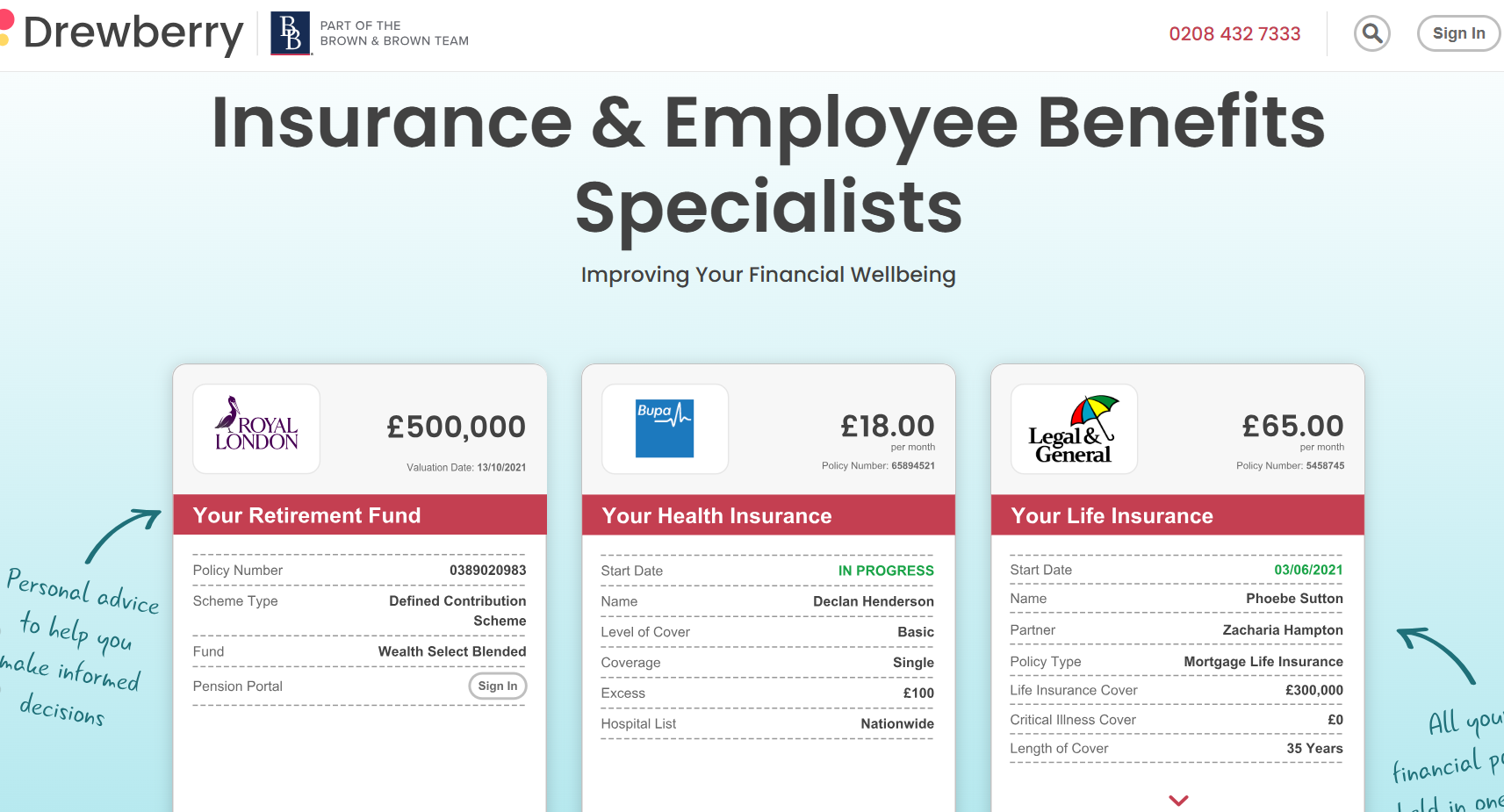
Drewberry is a whole-of-market employee benefits broker, now part of Brown & Brown following their acquisition in 2026. They operate with an advisory-first model, assigning a dedicated consultant to each client and handling provider comparison and programme setup on your behalf. Their benchmarking service lets you measure your benefits package against other employers, which can be useful if you're building out a programme for the first time or reviewing what you currently offer.
Private medical insurance, group life, income protection, critical illness, workplace pensions, and health cash plans. Whole-of-market brokerage with a recommendation report included.
My.Drewberry is their client portal, giving employees access to a discount scheme and benefits information.
Employers who want a whole-of-market broker with advisory support, benchmarking, and a client portal.
Commission-based, with fees depending on product and scope of service.

Hooray Health & Protection is an independent health and protection broker with a strong focus on startups and SMEs. As a whole-of-market broker, they approach insurers on your behalf and help employers compare options and put cover in place.
Business health insurance, group life, income protection, critical illness, and health cash plans. Independent, whole-of-market advice across health and protection.
Hooray is a broker-led service with no proprietary benefits portal, but they provide professional advice on specific issues surrounding benefits platforms, such as insurance schemes and how they can sync with your platform
Startups and smaller SMEs focused primarily on health and group risk who want an experienced broker built around that segment
Commission-based; no advisory fee.
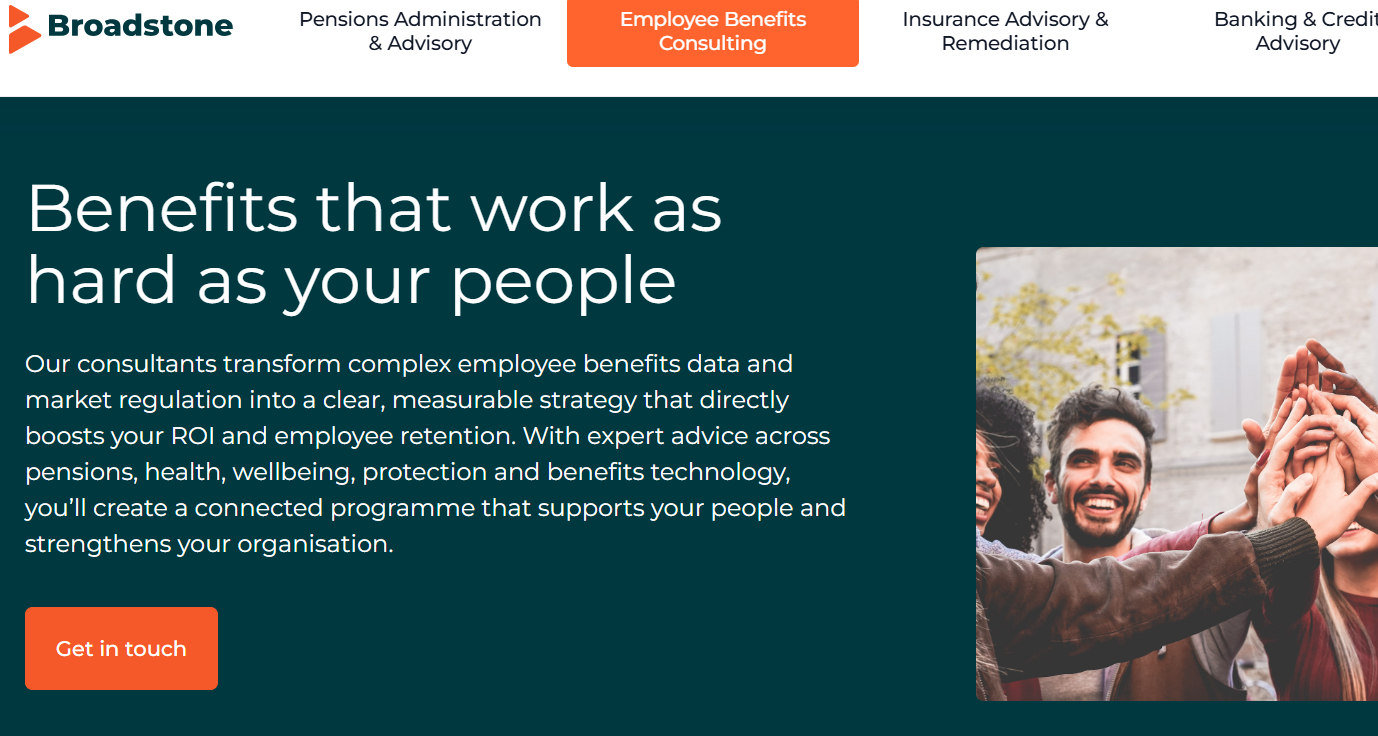
Broadstone is an independent employee benefits consultancy that advises employers on employee benefits, pensions, insurance and wellbeing. Its consultancy-led approach is designed to create a joined-up benefits strategy rather than a set of standalone policies.
Private medical insurance, group life, income protection, critical illness, wellbeing programmes, flexible benefits, and pensions-related advice.
Broadstone offers Flexcel, their benefits technology platform, for managing employee selections, benefit tracking and reporting.
Companies that want a consultancy-led relationship across the full spectrum of employee benefits.
Broadstone works on a commission and/or fee basis depending on the engagement.
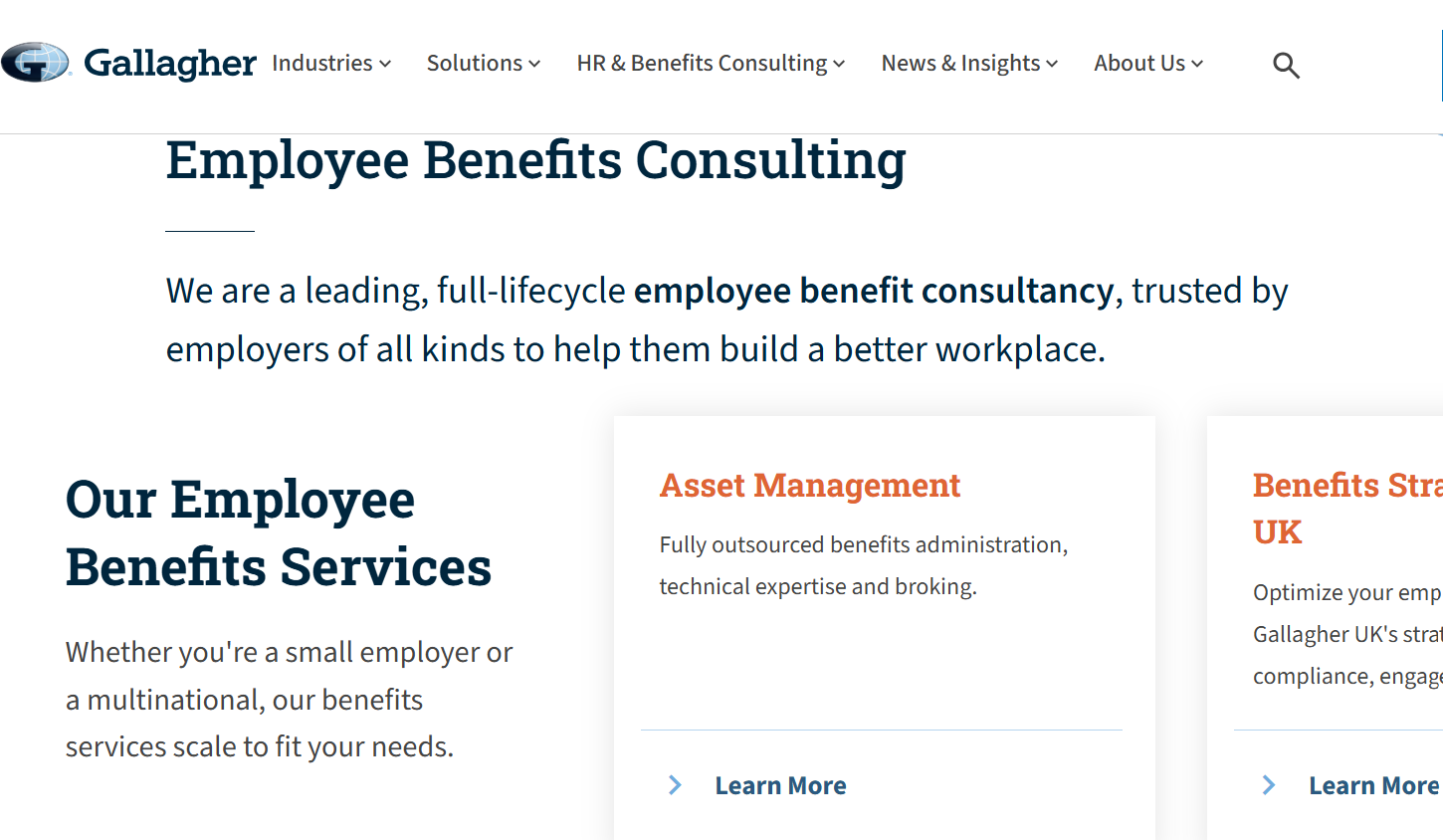
Gallagher is a UK employee benefits consultancy with a broad advisory and broking offer across health, protection, pensions, flexible benefits, and wellbeing. Its consultancy-led model is built around strategy, scheme design, and ongoing support rather than standalone point products.
Private medical insurance, group life, income protection, critical illness, dental, workplace pensions, flexible benefits, and employee wellbeing services. They also support international employer programmes.
Gallagher Guide is their employee-facing benefits portal, covering benefit selection, compensation and rewards.
Mid-to-large employers, particularly those running complex benefits schemes or managing multinational programmes.
Commission and/or fee-based depending on scope.
PIB Employee Benefits is a UK-based employee benefits consultancy and broker with international capabilities. They position themselves as a partner across strategy, broking, implementation, communication, maintenance, and global benefits support.
PIB brokers private medical insurance, group life, income protection, critical illness, dental, cash plans, workplace pensions, wellbeing, and benefits communications. They also support organisations with international and globally mobile workforce.
PIB offers a benefits technology platform called glo. It’s available across packages, including a discounts portal, a data-driven information portal, and a fully customisable portal with flexible and voluntary benefits.
Employers that want a consultancy-led relationship across the benefits spectrum, including pensions, with support for international programmes.
Commission and/or fee-based.
The differences between brokers are worth a closer look at the shortlisting stage. Here's what to evaluate before you commit.
The brokers on this list tend to vary on all five points. The comparison table above sets out where each one sits.
The brokers on this list vary significantly in scope. Some cover health and protection only. Others add pensions. Majority offer some form of portal on top. Most will place your policies and hand a lot of the ongoing admin back to you.
That works fine if your programme is simple and stable. It gets harder when you're adding benefit types, growing headcount, and managing three or four renewal cycles a year across separate provider relationships.
If you want one place that brokers your full programme and handles the administration (joiners, leavers, renewals, employee access) without it falling back to your team, that's Kota. Book a free benefits review and we'll show you how it works.
Not legally, but in practice it makes a significant difference. Going direct to an insurer means one quote, on their terms, with no independent comparison. A broker shops the market on your behalf, handles renewals, and gives you someone to call when things need to change mid-year. For employers managing more than one benefit type, the coordination value alone tends to justify it.
Most employee benefits brokers are paid a commission by the insurer whose policy you take out. That commission is built into the premium, so there's no separate fee charged to you as an employer. Some brokers, particularly those working with larger organisations, charge a fee instead, or a combination of both. You're entitled to ask your broker how they're remunerated before you commit.
Switching is straightforward in most cases. You appoint a new broker by submitting a broker of record letter to your insurer, which transfers the relationship without changing your underlying policy or disrupting cover. Your existing policies stay in place, and only the broker managing them changes. The best time to switch is ahead of a renewal, when your new broker can go to market on your behalf from the start.
A whole-of-market broker can access any insurer in the market and isn't tied to a preferred panel of providers. A panel-based broker works from a selected list of insurers they have relationships with, which can still be wide and competitive, but isn't the full market. In practice, the distinction matters less than whether your broker is genuinely comparing options on your behalf rather than defaulting to a preferred provider.
It depends on the benefits involved and the size of your team. A straightforward group health or life policy can typically be placed within a few weeks. A full programme covering multiple benefit types will take longer, particularly if it involves scheme design, provider comparisons across each product, and employee communications.
Senior benefits consultant at Kota, bringing 25+ years of experience working in employee insurance benefits.

.png)
.png)
.svg)
.svg)
.svg)